About / Overview

What is AI in Education?

What is AI in Education?

What is AI in Education?

Artificial intelligence (AI) in education refers to a range of computational systems designed to support teaching, learning, and institutional decision-making. These include adaptive learning platforms, automated feedback tools, learning analytics dashboards, administrative assistants, and plagiarism detection systems.

AI is not meant to replace educators; rather, it augments human work by handling tasks that benefit from automation, pattern recognition, or large-scale data processing.

In this project, we adopt a broad definitionAI in education systems rather than for example AI in online learningbecause the technologies we examine influence students, teachers, schools, and policymakers across both digital and physical settings.

Not sure about a term?
See Glossary of Terms → for all definitions and key concepts used in this project

AI in Education in Practice
The following images were generated using Nano Banana Pro ↗︎.
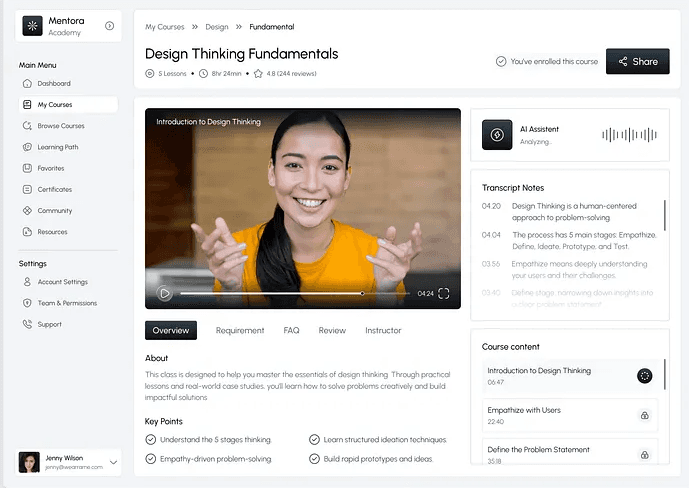
AI Powered Learning Dashboard
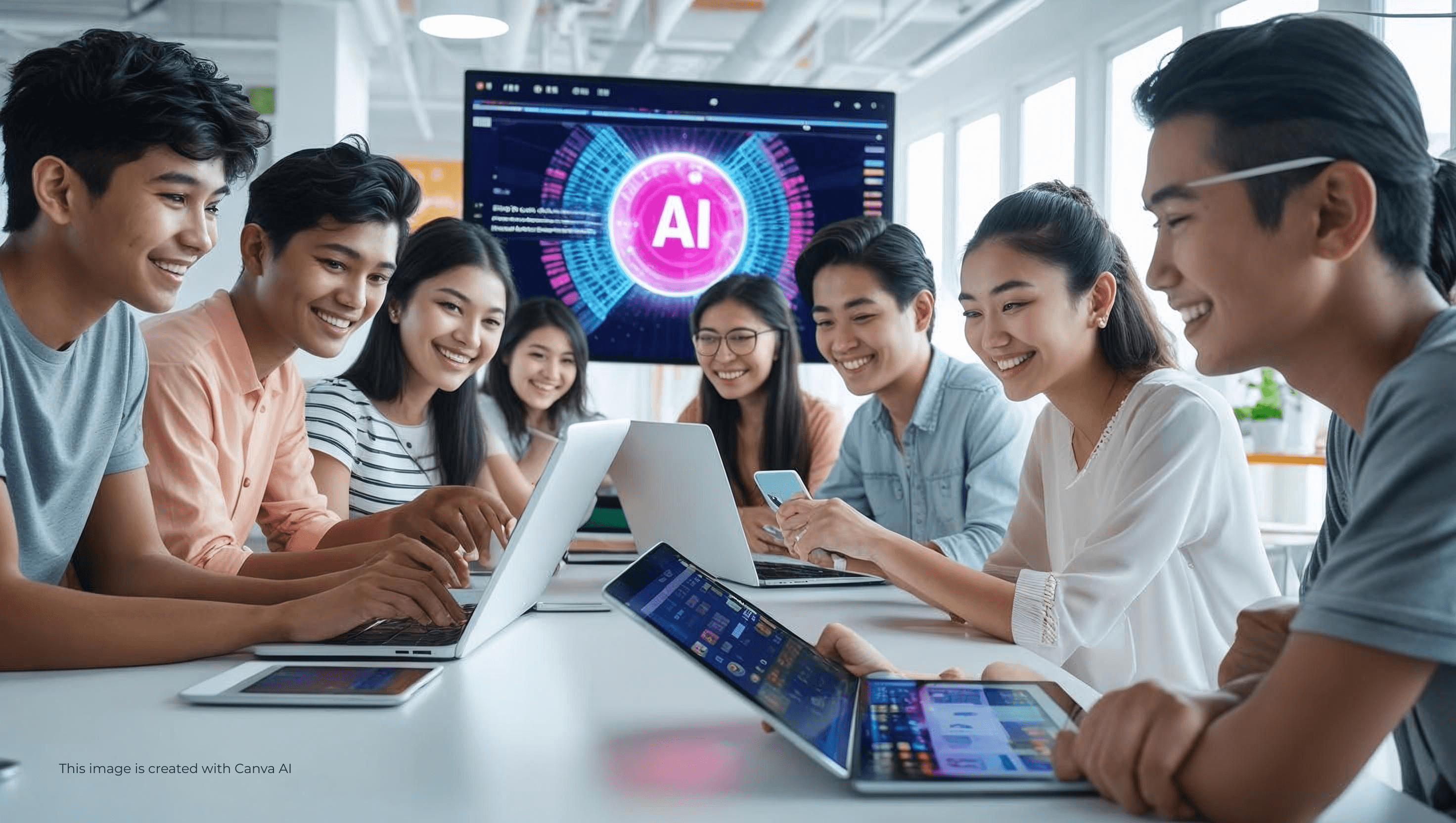
Students
with AI tools
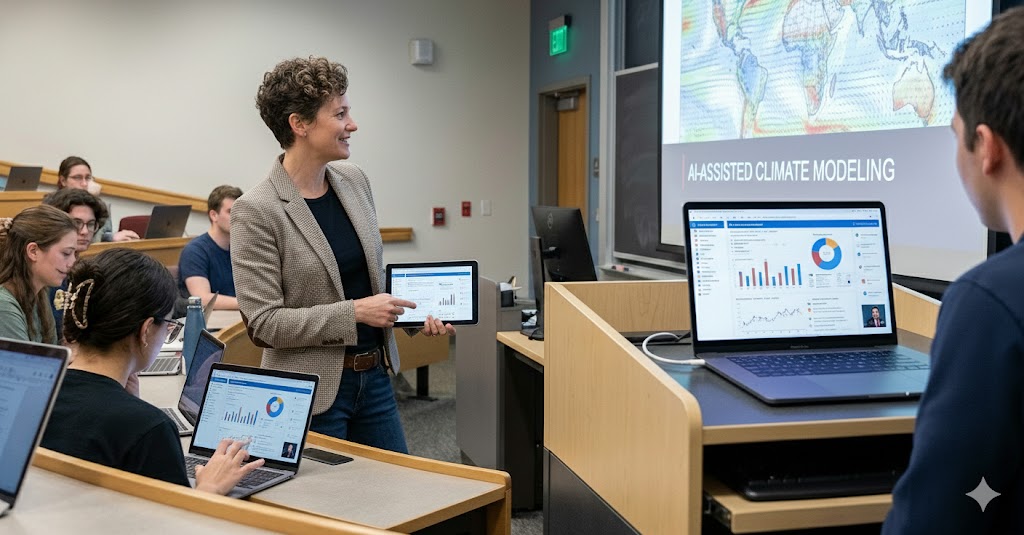
Analytical & Progress Tracking

Higher Institutions

What Counts as "AI in Education"?

In this project, a tool counts as AI in Education when it uses computational models to perform tasks involving prediction, pattern recognition, adaptation, or content generation. Typically, these systems:

Learn from data to improve predictions, recommendations, or performance.

Generate new content, such as text, explanations, or practice questions.

Detect patterns that would be difficult for humans to detect quickly (e.g., risk alerts, behavioural trends).

Adapt to individual learners, adjusting pacing, content, or feedback.

Support decision-making through machine-learning models or predictive analytics.

These criteria distinguish AI-driven systems from ordinary digital tools and help clarify which technologies are relevant to our research and analysis.

What Does NOT Count as "AI in Education"?

Some education technologies are digital but not AI-driven because they do not learn, generate content, or adapt. These include:

Static tools such as videos, PDFs, e-books, or slide decks.

Rule-based platforms that follow fixed instructions with no adaptive behaviour (e.g., simple auto-grading with answer keys).

Basic LMS functions such as file uploads, announcements, manual gradebooks, and deadline calendars.

Conventional software like calculators, spreadsheets, and image editors.

These tools support teaching and learning, but they do not perform tasks involving pattern recognition, adaptation, or generation. As such, they fall outside the scope of AI in Education.

Why is it Important?

Why is it Important?

Why is it Important?

AI matters in education for four structural reasons:

1.

1.

Learning is increasingly personalised

AI tools are becoming part of everyday study habits, giving students access to on-demand explanations, writing support, and interactive feedback.

As these tools become more common, personalisation shifts from an optional enhancement to a routine expectation in the learning experience. Adaptive systems make this possible by adjusting pacing and content based on individual progress, helping students address gaps earlier than traditional instruction.
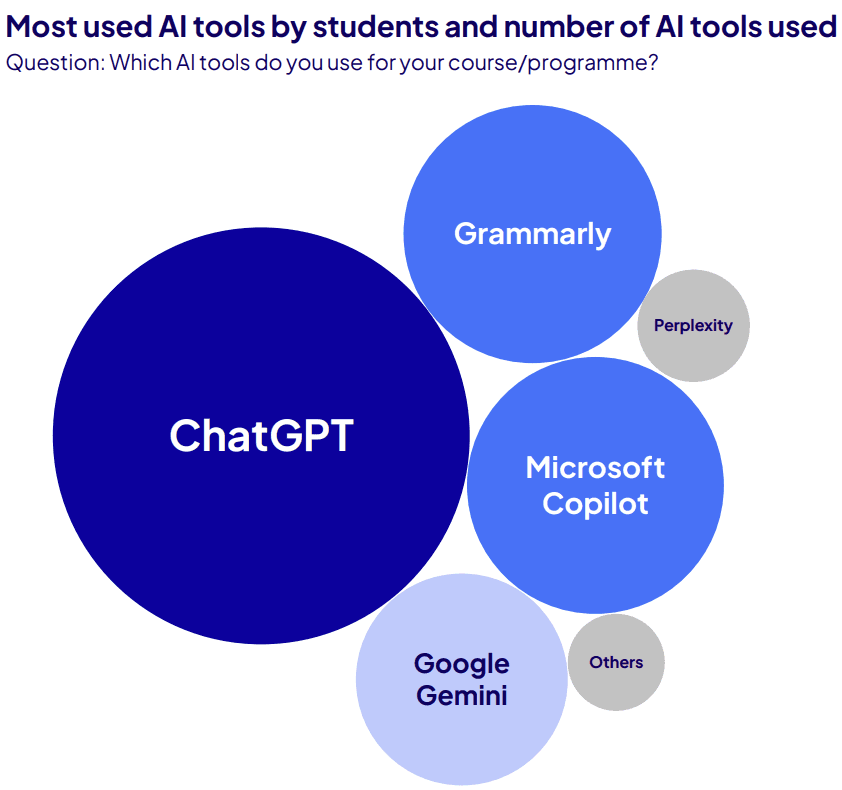
Source: Digital Education Council Global AI Student Survey, 2024

Source: Digital Education Council Global AI Student Survey, 2024

Source: Digital Education Council Global AI Student Survey, 2024

2.

2.

Educational workloads are increasing

Teachers now navigate more and more responsibilities, from administrative documentation to communication and resource preparation. AI technologies can help alleviate these pressures by automating repetitive tasks and offering supportive teaching tools. However, adoption varies widely, reflecting different levels of readiness, training access, and comfort with integrating AI into daily practice.
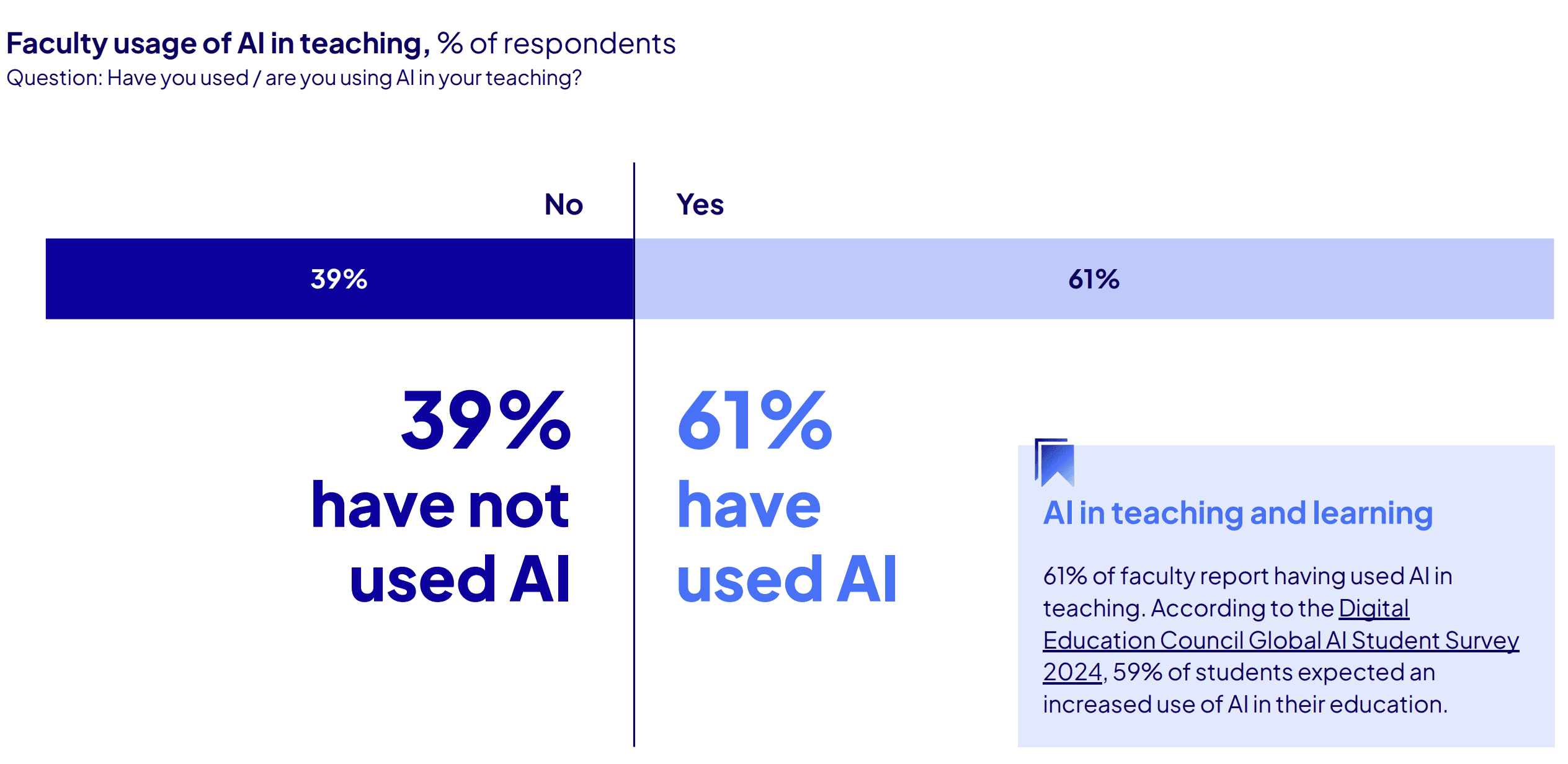
Source: Digital Education Council Global AI Faculty Survey, 2025

Source: Digital Education Council Global AI Faculty Survey, 2025

Source: Digital Education Council Global AI Faculty Survey, 2025

3.

3.

Institutions operate in a data-rich environment

Schools and universities manage large volumes of learning data, such as attendance logs, engagement metrics, assessment attempts, digital interactions, and more. AI makes sense of these patterns by highlighting trends that might otherwise remain invisible, supporting earlier interventions and more informed decision-making. This shift toward data-supported insight enables educators to understand learners’ needs at a broader and more granular level.

4.

4.

Academic integrity is under new pressure

With generative AI widely accessible, there's growing concerns about originality, authorship, and fairness in assessment. Institutions are responding by rethinking evaluation methods and exploring detection tools, alongside more process-oriented forms of assessment. Many educators now recognise that maintaining academic integrity requires not only technology, but also updated policies and clearer expectations for students.
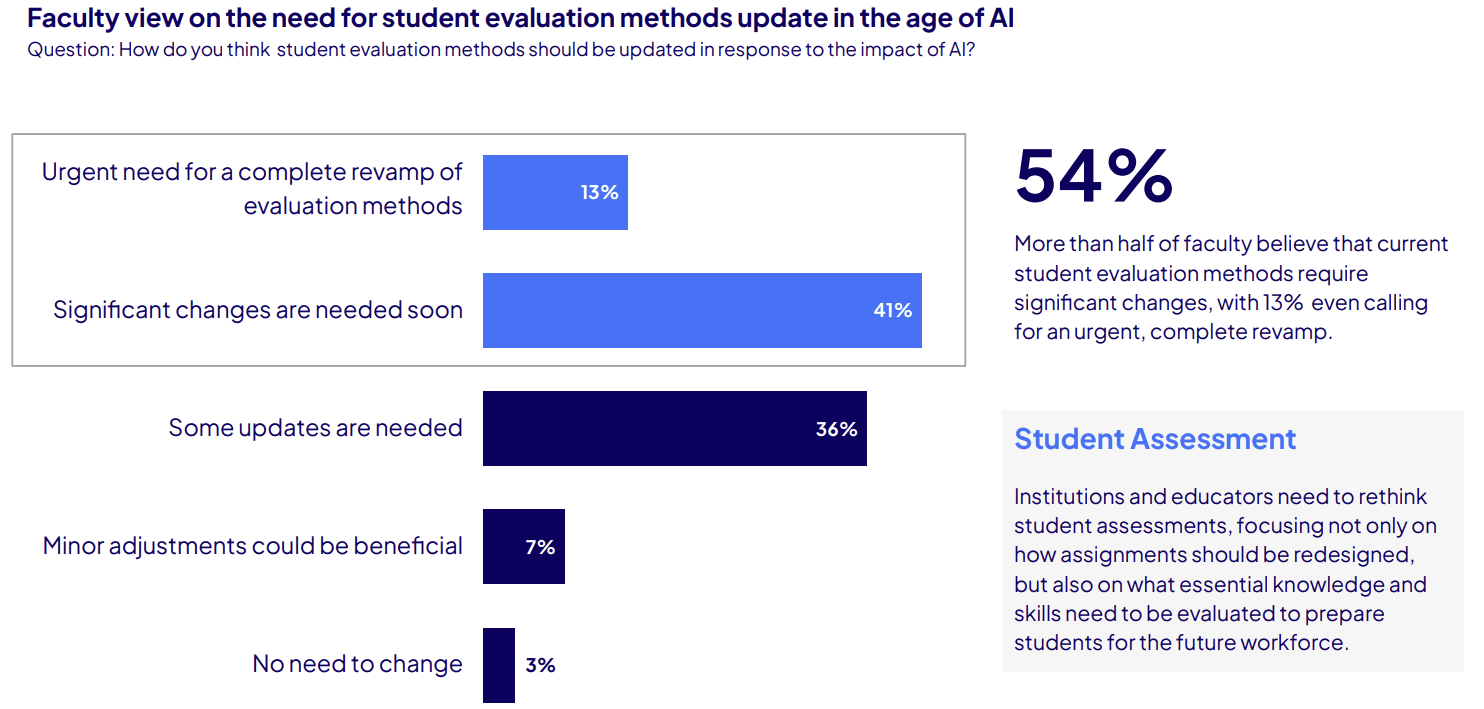
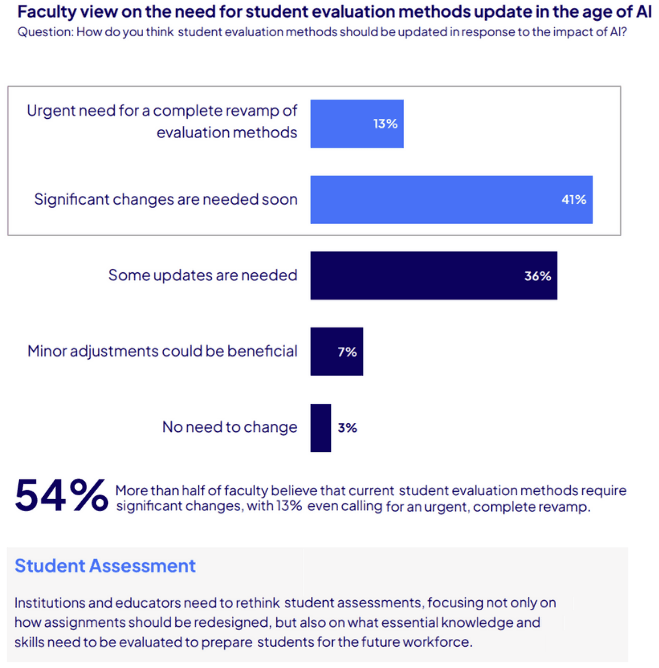
Source: Digital Education Council Global AI Faculty Survey, 2025

Source: Digital Education Council Global AI Faculty Survey, 2025

Source: Digital Education Council Global AI Faculty Survey, 2025


These four areas form the conceptual foundation of our research paper.
The following video provides a condensed summary of these ideas.

Video Overview: “AI in Education”

Video Overview:
“AI in Education”

This short video was generated by Google NotebookLM ↗︎, with permission from our instructor. It summarises the key findings from our research paper, providing a brief accessible overview before you proceed to the full text.

This short video was generated by Google NotebookLM ↗︎, with permission from our instructor. It summarises the key findings from our research paper, providing a brief accessible overview before you proceed to the full text.

Video Transcript

Click to Expand | Transcribed by uniscribe ↗︎

Let's talk about artificial intelligence in education. You know, this isn't some far-off science fiction idea anymore. It's here, right now. It is completely changing the game for how students learn and how teachers teach. And today, we're going to dive into both the incredible promise and, yeah, the potential peril of this whole transformation. And I'm not talking about some niche trend in a few high-tech classrooms. Get this, a staggering 86% of students are already using AI. That's a massive fundamental shift. And it really forces us to ask some big questions. What is this technology promising us? And what are the real dangers hiding in the code?

So what's the number one selling point for AI in the classroom? Well, it's the dream of truly personalized learning. I mean, imagine a classroom of one where everything, the lessons, the pace, the style adapts perfectly to you. Let's take a look at how that's supposed to work. Okay, so it all happens through these things called adaptive platforms that adjust to you in real time. If you master a concept, boom, you move on. No more getting bored and waiting for the rest of the class to catch up. But if you're struggling, the AI gives you targeted practice right where you need it. The whole idea is to get rid of wasted time and keep you in that sweet spot of being challenged and engaged. A perfect, custom-built learning path for every single student. It sounds incredible, right? Almost too good to be true. So, you have to ask, does this level of personalization come with a hidden cost? And here's where it gets complicated. On one hand, you have instant customized help, which is amazing. But on the other hand, there's a serious risk. If students start to rely on AI for every single right answer, they might stop developing the ability to question, to reason for themselves, to build an argument. Are we accidentally trading critical thinking for convenience? It's a huge question.

Okay, so we've talked about students, but AI's impact doesn't stop there. It's also being sold as this revolutionary new assistant for teachers, something that can handle all the boring, tedious stuff so they can focus on what actually matters: Teaching. I mean, just think about the countless hours teachers spend on paperwork and admin, AI promises to automate grading, help with lesson plans, and just cut down on all that repetitive work. And the research shows this does more than just save time. It actually boosts a teacher's confidence with technology and makes them more engaged in their job. And look, this isn't just a theory or some wishful thinking. A recent study actually measured this. They found that when teachers and AI work together, it has a significant, positive impact on both their tech confidence and their engagement with their work. That's a powerful psychological win. So if the tech is so great, why isn't it in every single classroom already? Well, it turns out that having a powerful tool is only half the battle. The other half is actually knowing how to use it. And here is the reality check. A whopping two-thirds of educators report that they struggle with these new AI tools, mostly because they just don't have the digital skills yet. So there's this huge gap between what the technology can do and how ready the workforce is to use it. This really highlights a critical point. The promise of efficiency is pretty much empty if we don't invest in people. The technology is only as good as the teacher's ability to actually use it, which makes good continuous training absolutely essential.

Okay, now let's pop the hood for a second. Everything we've talked about, the personalization for students, the efficiency for teachers, it's all powered by one thing, data. AI analytics are the engine driving this entire revolution. This is a massive shift from reactive to proactive teaching. You know, instead of waiting for a student to fail a test, AI analytics can spot patterns early on and flag that someone might be struggling. This lets teachers jump in with help exactly when and where it's needed most. Again, this data-driven insight seems like a superpower for educators, right? But you know what's coming. We have to ask the critical question. What happens if the data the AI is learning from is biased from the very beginning? And that brings us to a huge issue called algorithmic bias. To put it simply, if you train an AI on data that reflects historical or societal biases, well, guess what? The AI's decisions are going to be biased too. It can create this dangerous feedback loop that actually makes existing inequalities even worse. And that's the real dilemma here. The very same tool that could help identify and support a struggling student could, if it's built on flawed data, misidentify another student or push them in the wrong direction. Without really careful ethical rules and, importantly, human oversight, these powerful tools could easily do more harm than good.

All right, let's tackle one of the most heated debates, academic integrity. With AI that can write an entire essay in seconds, how do we make sure students are actually doing the work? Well, ironically, the solution everyone's turning to is, you guessed it, more AI. And when you look at the performance, the difference is just stark. The best AI detectors can spot AI-generated text with over 90% accuracy. Meanwhile, humans, we top out around 79%, and sometimes we're barely better than a coin flip. At this one specific task, the machines are just flat out better. So you see that 90-plus percent accuracy, and you think, great, problem solved. We just run every paper through the detector, and we're done, right? Well, as you can probably guess, it is not nearly that simple. And this number (5.3%) is exactly why. Even a top-of-the-line tool has a false negative rate of over 5%. So what does that mean? It means for every 100 papers written by AI, more than 5 of them can slip through, flagged as original. It lets dishonest work get through and really undermines the fairness of the whole system. So maybe the solution isn't just a better detection tool. Maybe it's a better type of assignment. A lot of researchers are pushing to move away from that one big high-stakes essay that's super easy to fake. Instead, they're recommending assessments that actually show the student's process. Things like multiple drafts, revisions, conversations about feedback. It's a whole lot harder to fake a genuine learning journey.

So when you look at all these pieces, personalization, teacher efficiency, data analytics, academic integrity, one thing becomes really clear. The future isn't about choosing between AI and traditional teaching. It's all about finding the right smart balance between the two. And make no mistake, this change is happening, and it is happening fast. The market for AI in education is projected to absolutely explode from about $7 billion in 2025 to over $112 billion by 2034. This is not a fad. It's a fundamental shift in both our economy and our schools. And that leaves us with one final critical question. The technology is here and it's not going anywhere. So the challenge for all of us, for parents, for teachers, for students, is to make sure we use it not just to get faster answers, but to build better, more critical thinkers. Because really, the future of education depends on it.

Video Transcript

Click to Expand
Transcribed by uniscribe ↗︎

Let's talk about artificial intelligence in education. You know, this isn't some far-off science fiction idea anymore. It's here, right now. It is completely changing the game for how students learn and how teachers teach. And today, we're going to dive into both the incredible promise and, yeah, the potential peril of this whole transformation. And I'm not talking about some niche trend in a few high-tech classrooms. Get this, a staggering 86% of students are already using AI. That's a massive fundamental shift. And it really forces us to ask some big questions. What is this technology promising us? And what are the real dangers hiding in the code?

So what's the number one selling point for AI in the classroom? Well, it's the dream of truly personalized learning. I mean, imagine a classroom of one where everything, the lessons, the pace, the style adapts perfectly to you. Let's take a look at how that's supposed to work. Okay, so it all happens through these things called adaptive platforms that adjust to you in real time. If you master a concept, boom, you move on. No more getting bored and waiting for the rest of the class to catch up. But if you're struggling, the AI gives you targeted practice right where you need it. The whole idea is to get rid of wasted time and keep you in that sweet spot of being challenged and engaged. A perfect, custom-built learning path for every single student. It sounds incredible, right? Almost too good to be true. So, you have to ask, does this level of personalization come with a hidden cost? And here's where it gets complicated. On one hand, you have instant customized help, which is amazing. But on the other hand, there's a serious risk. If students start to rely on AI for every single right answer, they might stop developing the ability to question, to reason for themselves, to build an argument. Are we accidentally trading critical thinking for convenience? It's a huge question.

Okay, so we've talked about students, but AI's impact doesn't stop there. It's also being sold as this revolutionary new assistant for teachers, something that can handle all the boring, tedious stuff so they can focus on what actually matters: Teaching. I mean, just think about the countless hours teachers spend on paperwork and admin, AI promises to automate grading, help with lesson plans, and just cut down on all that repetitive work. And the research shows this does more than just save time. It actually boosts a teacher's confidence with technology and makes them more engaged in their job. And look, this isn't just a theory or some wishful thinking. A recent study actually measured this. They found that when teachers and AI work together, it has a significant, positive impact on both their tech confidence and their engagement with their work. That's a powerful psychological win. So if the tech is so great, why isn't it in every single classroom already? Well, it turns out that having a powerful tool is only half the battle. The other half is actually knowing how to use it. And here is the reality check. A whopping two-thirds of educators report that they struggle with these new AI tools, mostly because they just don't have the digital skills yet. So there's this huge gap between what the technology can do and how ready the workforce is to use it. This really highlights a critical point. The promise of efficiency is pretty much empty if we don't invest in people. The technology is only as good as the teacher's ability to actually use it, which makes good continuous training absolutely essential.

Okay, now let's pop the hood for a second. Everything we've talked about, the personalization for students, the efficiency for teachers, it's all powered by one thing, data. AI analytics are the engine driving this entire revolution. This is a massive shift from reactive to proactive teaching. You know, instead of waiting for a student to fail a test, AI analytics can spot patterns early on and flag that someone might be struggling. This lets teachers jump in with help exactly when and where it's needed most. Again, this data-driven insight seems like a superpower for educators, right? But you know what's coming. We have to ask the critical question. What happens if the data the AI is learning from is biased from the very beginning? And that brings us to a huge issue called algorithmic bias. To put it simply, if you train an AI on data that reflects historical or societal biases, well, guess what? The AI's decisions are going to be biased too. It can create this dangerous feedback loop that actually makes existing inequalities even worse. And that's the real dilemma here. The very same tool that could help identify and support a struggling student could, if it's built on flawed data, misidentify another student or push them in the wrong direction. Without really careful ethical rules and, importantly, human oversight, these powerful tools could easily do more harm than good.

All right, let's tackle one of the most heated debates, academic integrity. With AI that can write an entire essay in seconds, how do we make sure students are actually doing the work? Well, ironically, the solution everyone's turning to is, you guessed it, more AI. And when you look at the performance, the difference is just stark. The best AI detectors can spot AI-generated text with over 90% accuracy. Meanwhile, humans, we top out around 79%, and sometimes we're barely better than a coin flip. At this one specific task, the machines are just flat out better. So you see that 90-plus percent accuracy, and you think, great, problem solved. We just run every paper through the detector, and we're done, right? Well, as you can probably guess, it is not nearly that simple. And this number (5.3%) is exactly why. Even a top-of-the-line tool has a false negative rate of over 5%. So what does that mean? It means for every 100 papers written by AI, more than 5 of them can slip through, flagged as original. It lets dishonest work get through and really undermines the fairness of the whole system. So maybe the solution isn't just a better detection tool. Maybe it's a better type of assignment. A lot of researchers are pushing to move away from that one big high-stakes essay that's super easy to fake. Instead, they're recommending assessments that actually show the student's process. Things like multiple drafts, revisions, conversations about feedback. It's a whole lot harder to fake a genuine learning journey.

So when you look at all these pieces, personalization, teacher efficiency, data analytics, academic integrity, one thing becomes really clear. The future isn't about choosing between AI and traditional teaching. It's all about finding the right smart balance between the two. And make no mistake, this change is happening, and it is happening fast. The market for AI in education is projected to absolutely explode from about $7 billion in 2025 to over $112 billion by 2034. This is not a fad. It's a fundamental shift in both our economy and our schools. And that leaves us with one final critical question. The technology is here and it's not going anywhere. So the challenge for all of us, for parents, for teachers, for students, is to make sure we use it not just to get faster answers, but to build better, more critical thinkers. Because really, the future of education depends on it.

Video Transcript

Click to Expand | Transcribed by uniscribe ↗︎

Let's talk about artificial intelligence in education. You know, this isn't some far-off science fiction idea anymore. It's here, right now. It is completely changing the game for how students learn and how teachers teach. And today, we're going to dive into both the incredible promise and, yeah, the potential peril of this whole transformation. And I'm not talking about some niche trend in a few high-tech classrooms. Get this, a staggering 86% of students are already using AI. That's a massive fundamental shift. And it really forces us to ask some big questions. What is this technology promising us? And what are the real dangers hiding in the code?

So what's the number one selling point for AI in the classroom? Well, it's the dream of truly personalized learning. I mean, imagine a classroom of one where everything, the lessons, the pace, the style adapts perfectly to you. Let's take a look at how that's supposed to work. Okay, so it all happens through these things called adaptive platforms that adjust to you in real time. If you master a concept, boom, you move on. No more getting bored and waiting for the rest of the class to catch up. But if you're struggling, the AI gives you targeted practice right where you need it. The whole idea is to get rid of wasted time and keep you in that sweet spot of being challenged and engaged. A perfect, custom-built learning path for every single student. It sounds incredible, right? Almost too good to be true. So, you have to ask, does this level of personalization come with a hidden cost? And here's where it gets complicated. On one hand, you have instant customized help, which is amazing. But on the other hand, there's a serious risk. If students start to rely on AI for every single right answer, they might stop developing the ability to question, to reason for themselves, to build an argument. Are we accidentally trading critical thinking for convenience? It's a huge question.

Okay, so we've talked about students, but AI's impact doesn't stop there. It's also being sold as this revolutionary new assistant for teachers, something that can handle all the boring, tedious stuff so they can focus on what actually matters: Teaching. I mean, just think about the countless hours teachers spend on paperwork and admin, AI promises to automate grading, help with lesson plans, and just cut down on all that repetitive work. And the research shows this does more than just save time. It actually boosts a teacher's confidence with technology and makes them more engaged in their job. And look, this isn't just a theory or some wishful thinking. A recent study actually measured this. They found that when teachers and AI work together, it has a significant, positive impact on both their tech confidence and their engagement with their work. That's a powerful psychological win. So if the tech is so great, why isn't it in every single classroom already? Well, it turns out that having a powerful tool is only half the battle. The other half is actually knowing how to use it. And here is the reality check. A whopping two-thirds of educators report that they struggle with these new AI tools, mostly because they just don't have the digital skills yet. So there's this huge gap between what the technology can do and how ready the workforce is to use it. This really highlights a critical point. The promise of efficiency is pretty much empty if we don't invest in people. The technology is only as good as the teacher's ability to actually use it, which makes good continuous training absolutely essential.

Okay, now let's pop the hood for a second. Everything we've talked about, the personalization for students, the efficiency for teachers, it's all powered by one thing, data. AI analytics are the engine driving this entire revolution. This is a massive shift from reactive to proactive teaching. You know, instead of waiting for a student to fail a test, AI analytics can spot patterns early on and flag that someone might be struggling. This lets teachers jump in with help exactly when and where it's needed most. Again, this data-driven insight seems like a superpower for educators, right? But you know what's coming. We have to ask the critical question. What happens if the data the AI is learning from is biased from the very beginning? And that brings us to a huge issue called algorithmic bias. To put it simply, if you train an AI on data that reflects historical or societal biases, well, guess what? The AI's decisions are going to be biased too. It can create this dangerous feedback loop that actually makes existing inequalities even worse. And that's the real dilemma here. The very same tool that could help identify and support a struggling student could, if it's built on flawed data, misidentify another student or push them in the wrong direction. Without really careful ethical rules and, importantly, human oversight, these powerful tools could easily do more harm than good.

All right, let's tackle one of the most heated debates, academic integrity. With AI that can write an entire essay in seconds, how do we make sure students are actually doing the work? Well, ironically, the solution everyone's turning to is, you guessed it, more AI. And when you look at the performance, the difference is just stark. The best AI detectors can spot AI-generated text with over 90% accuracy. Meanwhile, humans, we top out around 79%, and sometimes we're barely better than a coin flip. At this one specific task, the machines are just flat out better. So you see that 90-plus percent accuracy, and you think, great, problem solved. We just run every paper through the detector, and we're done, right? Well, as you can probably guess, it is not nearly that simple. And this number (5.3%) is exactly why. Even a top-of-the-line tool has a false negative rate of over 5%. So what does that mean? It means for every 100 papers written by AI, more than 5 of them can slip through, flagged as original. It lets dishonest work get through and really undermines the fairness of the whole system. So maybe the solution isn't just a better detection tool. Maybe it's a better type of assignment. A lot of researchers are pushing to move away from that one big high-stakes essay that's super easy to fake. Instead, they're recommending assessments that actually show the student's process. Things like multiple drafts, revisions, conversations about feedback. It's a whole lot harder to fake a genuine learning journey.

So when you look at all these pieces, personalization, teacher efficiency, data analytics, academic integrity, one thing becomes really clear. The future isn't about choosing between AI and traditional teaching. It's all about finding the right smart balance between the two. And make no mistake, this change is happening, and it is happening fast. The market for AI in education is projected to absolutely explode from about $7 billion in 2025 to over $112 billion by 2034. This is not a fad. It's a fundamental shift in both our economy and our schools. And that leaves us with one final critical question. The technology is here and it's not going anywhere. So the challenge for all of us, for parents, for teachers, for students, is to make sure we use it not just to get faster answers, but to build better, more critical thinkers. Because really, the future of education depends on it.

Create a free website with Framer, the website builder loved by startups, designers and agencies.